
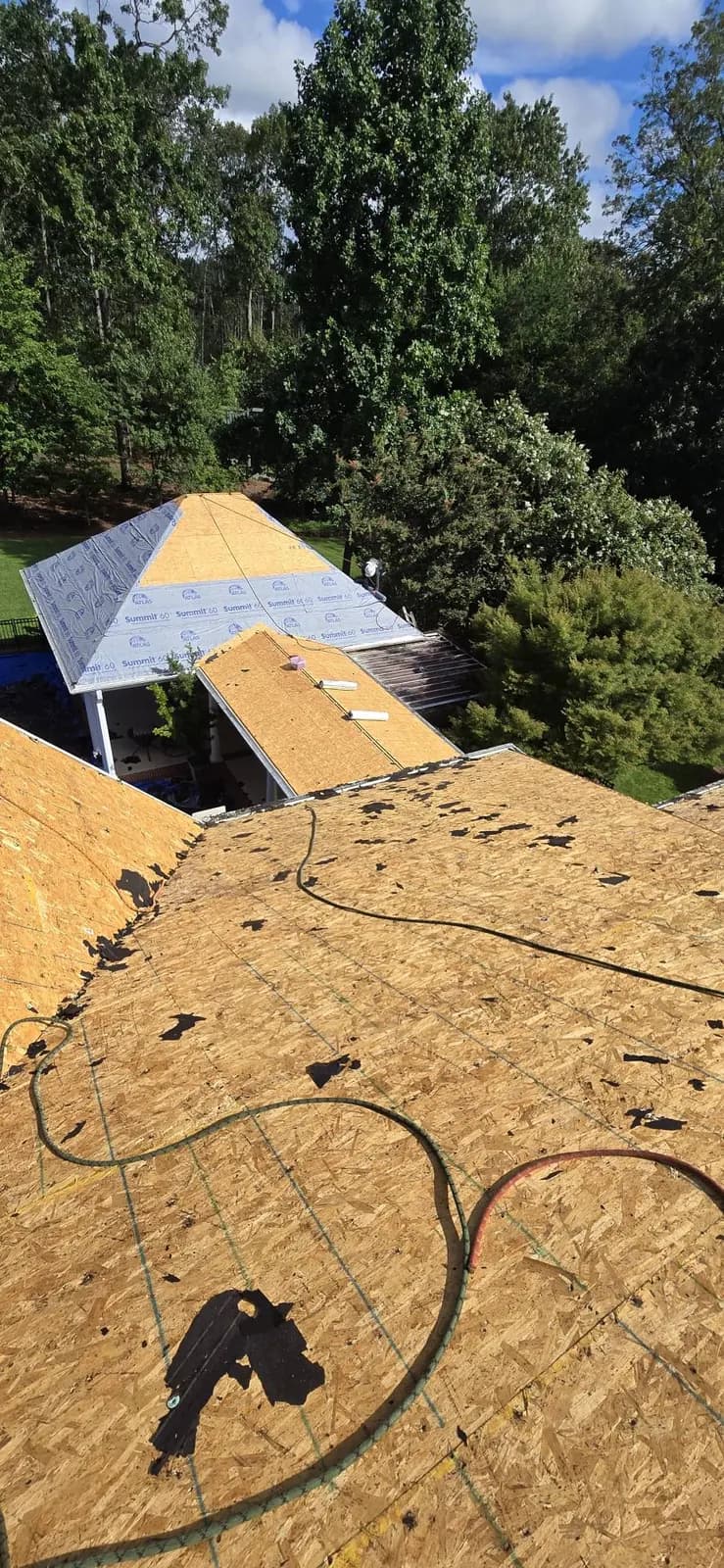
Common roof underlayment types
Traditional asphalt-saturated felt has a long roofing history and comes in different weights. It can wrinkle when wet and has handling and exposure limits. Fastening, overlaps, slope, weather, and the finished covering affect where it remains a suitable choice.
Synthetic underlayment is often lighter, stronger for its weight, and available in wide rolls. Surface traction, fastener requirements, exposure rating, vapor properties, and compatibility vary by product. The word synthetic does not make every roll interchangeable beneath every roof.
Self-adhered membrane bonds to a prepared deck and seals around many fasteners. It is commonly used for higher-risk areas rather than automatically across every entire roof. Temperature, primer, substrate, laps, and future removal all affect installation and cost.
Felt
A traditional asphalt-based sheet with specific lap, fastening, handling, and weather limitations.
Synthetic sheet
A manufactured underlayment selected by roof system, traction, exposure, and product requirements.
Self-adhered membrane
A bonded water barrier used where concentrated flow or penetrations raise leak risk.
Specialty layer
Metal, low-slope, high-temperature, or other assemblies may call for system-specific products.