Rhino Roofing & Restoration

Roof Replacement in Taylors, SC

Roof replacement in Taylors, SC starts with a simple question: has the old roof reached the point where another repair would only delay the same problems? Rhino Roofing & Restoration gives homeowners a direct answer based on the roof in front of us.

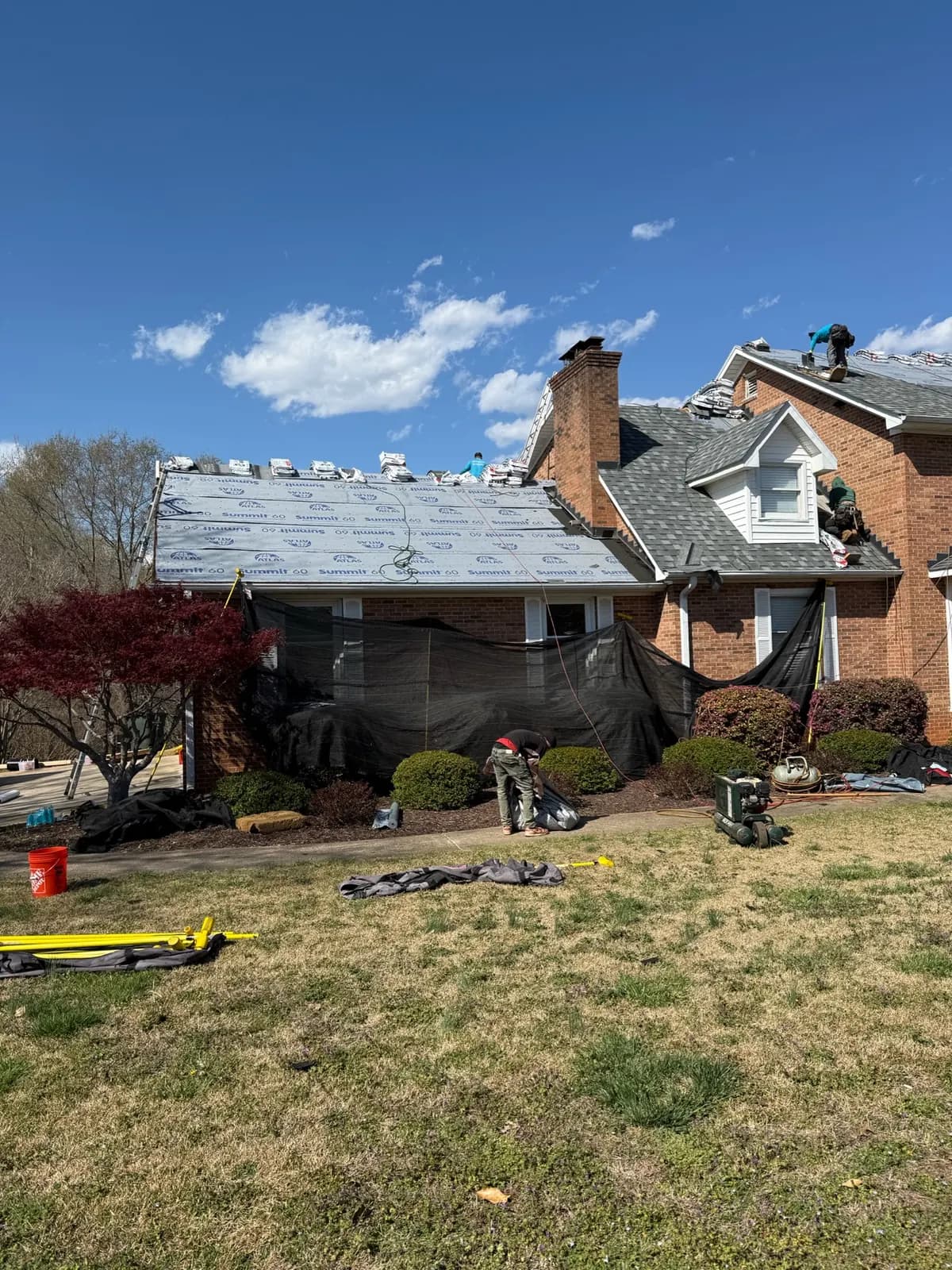
Roof replacement underway on a stone home

When repairs stop being the responsible answer

A worn roof does not always need to be replaced right away. One isolated leak, a few damaged shingles, or a failed pipe boot may still be a good repair candidate. Replacement makes more sense when problems are spread across the roof, the shingles have lost much of their protective granule layer, or poor installation has created leaks in several unrelated places.

Rhino brings construction experience dating to 1979 to that decision. We look at the number of roof layers, the condition of the shingles, soft or questionable decking, flashing around walls and chimneys, ridge components, valleys, and roof penetrations. The recommendation comes after that review—not before it.

01Service guide

What a roof replacement should correct

Tear-off exposes parts of the roof that cannot be judged from the driveway. Once the old material is removed, the crew can identify damaged sheathing, old patchwork, improper fastening, and openings that need attention. Covering those conditions would shorten the life of the new roof and make future leak tracing harder.

The details around dormers, valleys, chimneys, and plumbing vents deserve the same care as the large open roof planes. Rhino uses ice-and-water membrane around these vulnerable areas and pays close attention to pipe protection. Those smaller components are often where a roof either proves itself or starts giving a homeowner trouble.

  • Roof deck

    Unsound or deteriorated sheathing is identified after tear-off and discussed before it is covered.

  • Flashing

    Wall, chimney, and penetration details are checked instead of assuming the old metal can stay as-is.

  • Ventilation

    Intake and exhaust conditions are considered so heat and moisture can move through the attic.

  • Water defense

    Underlayment and ice-and-water membrane add protection beneath the finished roofing.

02Service guide

Choosing shingles for an Upstate home

Color and style matter, but they are only part of the choice. Wind performance, algae resistance, manufacturer support, and the complete accessory system matter too. Rhino often works with Atlas roofing products and values the company’s Scotchgard-related algae protection and its past response when a legitimate material issue appeared.

A homeowner should also understand the difference between a manufacturer warranty and a contractor’s labor coverage. Material protection addresses eligible product defects under the manufacturer’s terms. Rhino’s five-year labor warranty addresses installation workmanship. We explain both so the word warranty has a clear meaning before work begins.

03Service guide

What happens around your home on replacement day

Roof replacement is noisy and active. Materials come off, new components go up, and thousands of fasteners move through the job. Before work starts, homeowners should move vehicles, secure fragile wall items, protect belongings in the attic, and make a plan for pets that react to noise.

The crew manages tear-off debris and cleanup as the work moves forward. Rhino also inspects the installation while it is underway. That direct oversight helps catch a flashing, underlayment, or penetration detail while it is still visible and easy to correct—not after the last shingle is installed.

04Service guide

Roof replacement choices for Taylors weather

Roof replacement in Taylors, SC has to account for long stretches of summer heat, sudden downpours, wind, hail, tree debris, and humid attic conditions. Those forces do not affect every part of a roof equally. South- and west-facing shingles often take more sun. Rakes and ridges face stronger wind pressure. Valleys and lower roof sections receive concentrated water from the slopes above them.

Rhino uses the inspection to connect those local conditions to the material plan. A shaded roof with years of organic staining may benefit from a shingle system designed to resist algae. A house with a hot attic may need its intake and ridge exhaust reviewed before the new covering is selected. A roof beneath mature trees may call for a more deliberate plan for valley cleanup and gutter maintenance after installation.

Storm resistance also depends on the edge and starter courses, correct fastening, sealed shingles, ridge components, and sound deck attachment. A wind rating on a package is not a promise by itself. The product must be installed as a complete approved system. Rhino discusses the materials and workmanship together so homeowners know what creates the roof's real weather defense.

05Service guide

Planning cost, timing, and life after installation

A useful proposal should make the roof replacement scope easy to compare. Homeowners need to know the roofing product, underlayment, ice-and-water locations, ventilation work, pipe protection, flashing approach, tear-off plan, cleanup, and allowance method for hidden wood damage. A low total can be hard to judge when those details are missing or listed only after the old roof has been removed.

Weather can change the schedule even after materials arrive. Rhino watches the forecast and limits tear-off to roof areas that can be protected before conditions turn. The homeowner should also know where materials will be delivered, where the trailer or dumpster will sit, and how driveway access will work. These practical details reduce confusion on a busy project day.

After installation, keep the proposal, final invoice, color and product information, labor warranty, and any manufacturer registration together. Watch the roof from the ground after the first strong rain and note anything unusual around gutters, ceilings, or attic spaces. Most new roofs settle into service quietly, but clear records and a direct call to Rhino make any workmanship question easier to address during the five-year labor-warranty period.

The yard also needs a last look after the roofing crew finishes. Nails can hide in mulch, gravel, grass, and the edges of a driveway even after magnetic cleanup. Homeowners should keep children and pets away until the work area is released, then report anything that needs another pass. Check that gates operate, outdoor equipment is back in place, gutters are clear, and downspout extensions still direct water away from the foundation. A roof replacement is not complete if the new system looks good overhead but the property below was left difficult to use. Rhino reviews both the roof and the active work zone before calling the project closed, then gives the homeowner a direct way to raise a missed cleanup or finish concern. Before the crew departs, the project contact can also confirm that attic vents, bathroom exhaust outlets, chimney clearances, and visible roof accessories were returned to the planned condition. These small checks connect the finished exterior to the systems beneath it.

How we approach it

From old roof to finished system

A replacement runs more smoothly when the condition, materials, and expectations are settled before tear-off begins.

  1. 01

    Evaluate the existing roof

    We inspect its age, layers, leaks, shingle wear, flashing, penetrations, and ventilation before recommending replacement.

  2. 02

    Set the scope

    You receive a clear plan for materials, tear-off, protective layers, accessories, and how hidden deck damage will be handled.

  3. 03

    Install and review

    The roofing system is installed, the property is cleaned, and the finished details receive a final look.

Helpful answers

Roof Replacement questions

Replacement questions often center on timing, tear-off, hidden wood, and warranty coverage. An inspection connects those general answers to your roof.

How do I know whether to repair or replace my roof?

The answer depends on more than age. A localized issue may be repairable, while widespread wear, repeated leaks, brittle shingles, failing decking, or poor installation across the roof can make replacement the better value. Rhino inspects first and explains which conditions are driving the recommendation.

Can a new roof be installed over old shingles?

Local requirements and the roof’s current condition affect what is allowed, but tear-off usually gives the clearest view of the deck and old flashing. It also avoids trapping unknown defects beneath another layer. Rhino checks how many layers are present as part of the inspection.

What happens if damaged decking is found?

Deck damage is often hidden until the old roof comes off. If deteriorated or unsound sheathing appears, it should be replaced before the new roofing is installed. The scope should explain how those discoveries are documented, priced, and approved.

What labor warranty does Rhino provide?

Rhino provides a five-year labor warranty for installation-related problems, separate from the roofing manufacturer’s material warranty. Damage from a new storm, falling tree, or another outside event is not the same as an installation defect.

Ready when you are

Find out whether your roof is ready for replacement.

Call Rhino Roofing & Restoration for a careful inspection and a direct explanation of the condition of your roof.