Rhino Roofing & Restoration

Roof Deck Replacement in Taylors, SC

Roof deck replacement in Taylors, SC restores the solid base beneath shingles, metal, or membrane. Rhino identifies damaged sections during inspection or tear-off and explains the added work before covering them.

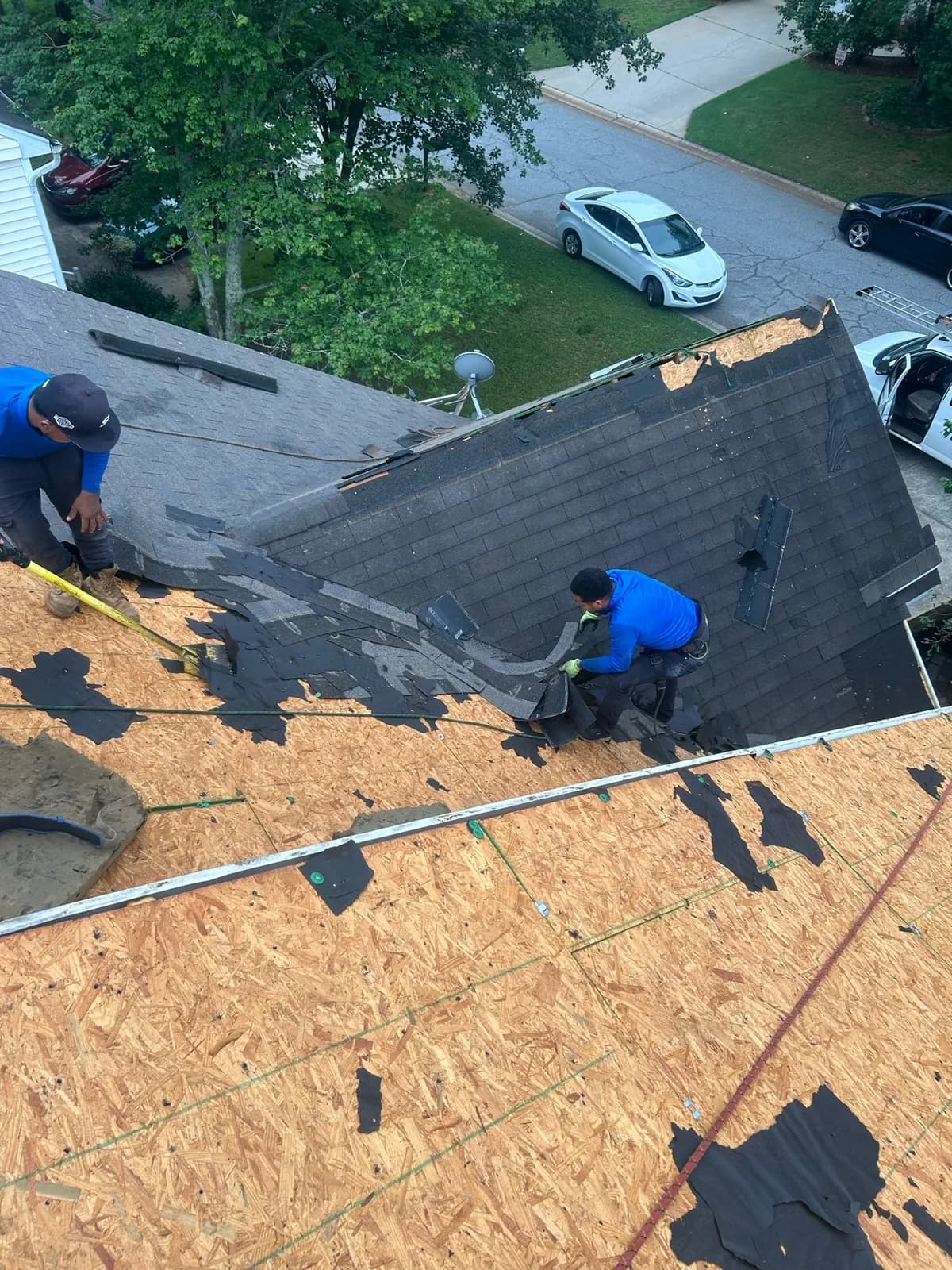
Roofers replacing damaged roof decking

What the roof deck does

Roof decking, also called sheathing, spans the framing and creates the surface that holds underlayment, flashing, and the finished roof. Plywood, oriented strand board, plank boards, metal, concrete, and other systems may serve that role. The material and building determine how new roofing can be attached.

Some deck trouble can be felt as softness or seen from the attic, but the full condition often stays hidden until old roofing is removed. Rhino discusses that uncertainty before replacement work. A planned unit price or allowance gives the owner a way to understand added wood work without pretending every concealed panel can be counted from the driveway.

01Service guide

Signs the roof deck may need replacement

Soft movement under foot, sagging between framing, dark water damage, delamination, broken edges, repeated fastener pullout, and visible holes can point to failed sheathing. Interior stains and wet insulation add context, but an old dry mark does not automatically mean the panel has lost strength.

Leaks around chimneys, valleys, pipe boots, skylights, and eaves can damage a contained deck area over time. Widespread moisture from poor ventilation, repeated roof failure, or a long-open building can affect many panels. The repair boundary follows sound material and proper framing support rather than the outline of a ceiling stain.

Older plank decks may have gaps, splits, or irregular boards that do not provide the fastening surface required by a new roofing system. The planks may be locally repaired, overlaid, or addressed another approved way after spacing, condition, code, and manufacturer needs are reviewed.

  • Soft or deflected area

    Movement may show lost panel strength, damaged edges, or framing concerns beneath the surface.

  • Water deterioration

    Swelling, delamination, crumbling wood, rust, or dark wet areas can change the repair boundary.

  • Fastening problem

    A deck that will not hold approved fasteners cannot support the selected roof as intended.

  • Unsuitable layout

    Large plank gaps, unsupported seams, and irregular transitions may need preparation before reroofing.

02Service guide

Why tear-off reveals more than an attic view

An attic inspection can show the underside of accessible decking, but insulation, finished ceilings, low clearance, framing, and stored items may block the view. Water can also damage the upper surface or panel edges while the underside looks less severe. Tear-off provides a direct look at the fastening plane.

Once shingles and underlayment are removed, the crew can check panel edges, old patches, nail holding, unsupported openings, and stains around penetrations. Bill reviews work while installation is underway so a questionable area can be discussed before new protective layers cover it.

Weather makes timing important. The crew should expose only what can be evaluated, repaired, and dried in safely. A large open deck is vulnerable to sudden Upstate rain. Rhino coordinates material, labor, and forecast so hidden work does not leave the building unprotected overnight.

03Service guide

Localized panel work versus a broader deck scope

A small leak around one pipe may damage only a limited section. The failed material can be cut back to sound wood with panel edges supported properly. The new piece should match the required thickness and create a flat plane so underlayment and roofing do not bridge an uneven joint.

Broader replacement may be needed when panels fail across several slopes, thickness is unsuitable, fastening cannot meet the new roof requirements, or old damage has been covered repeatedly. A full overlay or re-sheeting plan adds weight and changes edges, penetrations, and flashing heights, so it must be designed rather than treated as a quick cover.

Framing damage is different from deck replacement. Rafters, trusses, beams, or walls that are broken, altered, or broadly deteriorated may require structural evaluation and another qualified trade. Rhino identifies when the roofing scope reaches that boundary instead of assuming a sheet of wood can correct a framing problem.

04Service guide

Deck replacement cost and change documentation

Because much of the deck is hidden, a roof proposal should explain how added material is priced. Common methods include a per-sheet or measured-unit amount after an included allowance. The description should state the material basis and who approves work when the crew uncovers more than expected.

Photos of each affected area help the owner understand why replacement was needed. Measurements and counts should connect to the change record. When possible, the owner receives the update before the new section is covered, while the crew also keeps the roof moving toward a safe dry-in.

The lowest roofing estimate may omit realistic deck language and become harder to compare later. Ask how hidden wood, delivery, disposal, framing support, and material thickness are handled. A clear process does not predict every panel, but it removes surprise from the way necessary work is authorized and billed.

05Service guide

Protecting the new deck from another failure

The source of the original damage must be corrected. New wood beneath failed flashing, a cracked pipe boot, an open valley, or a continuing condensation problem will be exposed to the same moisture. Rhino rebuilds the roofing detail above the replaced deck and explains when attic or building-envelope work also belongs in the plan.

Underlayment and ice-and-water membrane provide secondary protection over the base. Rhino uses added membrane around dormers, valleys, chimneys, and penetrations during replacements. These layers help manage incidental water, but they do not make a poorly flashed roof acceptable.

Balanced ventilation and controlled indoor moisture can help keep a suitable wood deck dry from below. Bath exhaust should reach outdoors, attic intake should not be blocked, and roof exhaust should fit the house. Keep photographs of the replaced areas so any future inspection begins with a known history rather than a concealed patch.

06Service guide

What homeowners can expect on deck-replacement day

Deck work adds cutting, material handling, and time to an already active tear-off. Fine debris may enter an unfinished attic through old gaps, and the sound of panel removal travels through framing. Homeowners should cover stored attic items, secure fragile wall pieces, keep pets away from the noise, and leave vehicles clear of delivery and debris routes.

Replacement panels need a dry staging area and a safe route to the roof. The crew may pause one section while photos and approval are shared, then continue before changing weather reaches the opening. A clear project contact helps the decision move without asking the installers to conceal a questionable area or leave it exposed unnecessarily.

At closeout, the deck itself is hidden again. Keep the photographs, count or measured area, material description, and location notes with the roof invoice. Those records explain the added cost and give a future inspector a map of repaired sheathing without removing the new roofing to search for it.

How we approach it

Expose, verify, replace, and protect

Deck work is timed with roof removal so questionable material can be photographed, replaced, and covered in a safe sequence.

  1. 01

    Review visible clues

    Softness, leaks, attic evidence, roof layers, plank gaps, and past repairs shape the initial allowance and plan.

  2. 02

    Inspect during tear-off

    The exposed surface is checked for strength, attachment, moisture damage, support, and compatibility with the new roof.

  3. 03

    Replace and dry in

    Failed areas are rebuilt to suitable support, then protective layers and flashing are installed without leaving wood exposed.

Helpful answers

Roof Deck Replacement questions

Deck questions often involve hidden conditions, so a clear pricing and approval process matters as much as the first estimate.

Can Rhino tell how much decking is bad before tear-off?

Visible softness, attic evidence, staining, and roof movement can suggest damage, but the exact amount may remain hidden beneath old roofing. Rhino explains the allowance or unit-price method before work and documents what is found.

Can new shingles be installed over soft decking?

They should not be installed over a base that cannot hold approved fasteners or provide sound support. Covering weak material may lead to movement, fastener failure, uneven roofing, and continued moisture trouble.

Does deck replacement include damaged rafters or trusses?

Not automatically. Decking and structural framing are different parts. If Rhino uncovers damaged rafters, trusses, beams, or walls, the project may need a revised scope and another qualified professional.

Will I see why extra deck work was needed?

Rhino can photograph discovered areas and connect panel counts or measurements to the change. The approval process should be understood before tear-off so necessary work can be handled without covering unexplained damage.

Ready when you are

Give the new roof a base worth covering.

Talk with Rhino about roof deck replacement in Taylors, SC when an inspection, leak, or tear-off reveals damaged sheathing.