Rhino Roofing & Restoration

Roof Repair in Taylors, SC

Roof repair in Taylors, SC should begin with diagnosis. A stain on the ceiling may be several feet from the opening in the roof, and replacing the first damaged shingle in sight does not always stop the water.

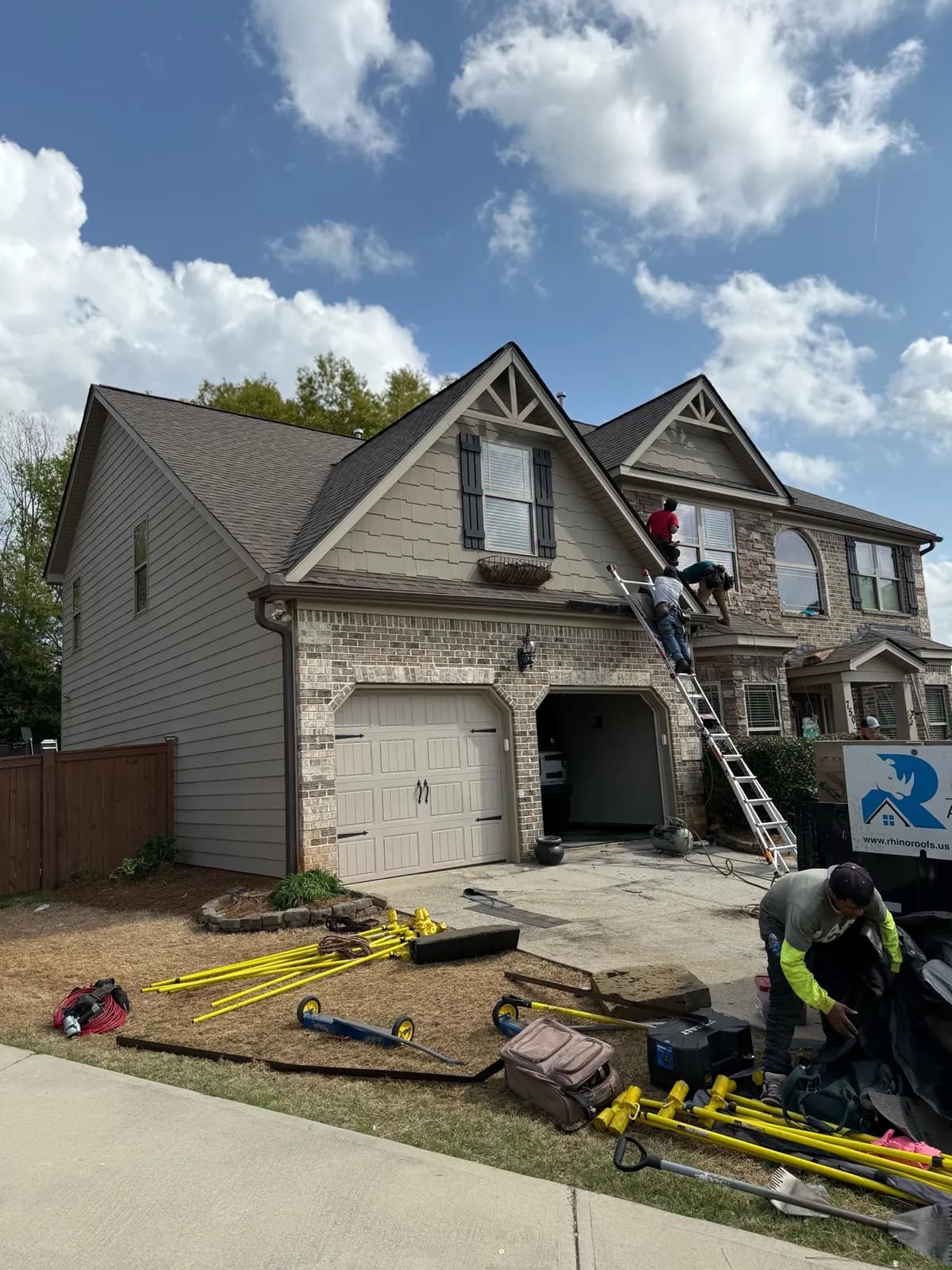
Rhino Roofing crew completing residential roof work

A small symptom can have a different source

Homeowners often call after seeing a damp ceiling, a shingle in the yard, or granules collecting near a downspout. Those clues matter, but none of them tells the whole story by itself. Wind can lift a shingle without carrying it away. Water can enter beside a chimney and travel along framing before it becomes visible indoors.

Rhino’s repair approach comes from decades in construction and roofing. We check the surrounding roof instead of treating one spot in isolation. That may include looking at nail placement, seal strips, old caulk, step flashing, kick-out flashing, pipe boots, ridge material, valleys, and signs that a previous repair moved the leak rather than solved it.

01Service guide

Common roof repairs around Taylors

Wind and installation defects are two common sources of trouble in the Upstate. A gust may crease or lift shingles, loosen a ridge component, or expose an area that was not fastened well. Installation trouble can appear much later as a nail backs out, a boot cracks, or flashing that was reused begins to leak.

Some repairs are simple once the cause is found. Others require opening a controlled area so the layers beneath can be rebuilt. The right scope depends on whether the surrounding material is still flexible and sound enough to work with without creating new damage.

  • Loose or missing shingles

    Wind-affected shingles may need replacement along with a check of the courses around them.

  • Nail pops

    A raised fastener can lift the shingle surface and create a direct path for water.

  • Failed pipe boots

    A cracked rubber collar can leak even when the shingles around it still look good.

  • Flashing leaks

    Chimneys, walls, and roof intersections need layered metal details, not caulk alone.

02Service guide

When a repair is worth doing

A repair is a strong option when damage is contained, the surrounding roof has useful life left, and the repaired area can be integrated into the existing system. Rhino does not believe every leak calls for a new roof. In some cases, correcting one flashing detail or replacing a failed vent component can keep a sound roof working.

There is also a point where patches stop serving the homeowner. Rhino once evaluated a roughly ten-year-old roof with about a dozen leaks caused by poor installation. The shingles were not especially old, but failures across that many locations meant another round of patches would be difficult to stand behind. The installation pattern—not just the calendar—made replacement the practical answer.

03Service guide

Why old flashing deserves a close look

Fresh shingles do not correct flashing that was installed poorly years ago. Rhino has found leaks on newer roofs where chimney flashing should have been replaced or at least properly serviced during the reroof. Cracked sealant then became the visible failure, but the weak detail had been left behind by the earlier job.

A durable repair relies on overlapping materials that shed water downhill. Sealant has a role, but it should support a sound flashing assembly rather than act as the entire assembly. That distinction is especially important at chimneys, sidewalls, and kick-out locations where concentrated water reaches the edge of a wall.

04Service guide

How water travels before a ceiling stain appears

Water rarely drops straight down from the first opening it finds. It may follow the underside of a nail, run along roof sheathing, move across a rafter, or collect on insulation before reaching drywall. A stain can show several feet away from the failed shingle or flashing. Roof pitch, framing direction, and the location of walls all change that path.

Rain direction gives useful clues. A leak that appears only in wind-driven rain may point toward a sidewall, ridge, vent, or lifted shingle facing the storm. A drip that follows every steady rain may be tied to a valley or open penetration. Moisture that appears without rain can also come from condensation, plumbing, or mechanical equipment, so a roof repair should not be prescribed from the stain alone.

Rhino compares the interior symptom with the roof geometry above it. Attic access, when available, can reveal darkened wood, rusted fasteners, wet insulation, or an old water track. Outside, the inspection works uphill and around nearby details rather than opening the roof at the first guessed location. That tracing takes more thought, but it keeps the repair focused on evidence.

05Service guide

What to expect after a roof repair

A repaired area may look different from the older roof. New shingles have not faded, new metal has not weathered, and fresh sealant has not collected the same dust as the surrounding materials. A visual difference does not mean the repair was installed incorrectly. Rhino explains likely appearance changes before work when a close color match is unavailable.

The first hard rain is a useful check, but the ceiling surface may not dry at once. Wet insulation and wood can hold moisture after the opening is closed. Marking the edge of an old stain lightly, taking a dated photo, or using a basic moisture reading can help separate old drying from new movement. If active water returns, note the rain direction and call rather than adding household caulk from inside.

Homeowners can help the repair last by keeping valleys and gutters free of debris, limiting unnecessary roof traffic, and watching nearby tree limbs. The repair does not stop the rest of the roof from aging. Rhino may recommend monitoring another worn component even when it does not belong in today's scope, giving the owner time to plan without turning a focused repair into an unexpected replacement.

Keep the repair description with photos of the work area and any matching material information. If the house changes hands, that record helps the next owner understand why one section looks newer and which leak was addressed. If a later stain appears, Rhino can compare its location and weather pattern with the earlier repair instead of starting with no history. Good records do not replace an inspection, but they shorten the path from a symptom to a sensible next question. On an older roof, the same file can show whether leaks are staying in one troubled detail or beginning to appear across unrelated slopes. That pattern helps the owner plan a replacement at the right time instead of treating every call as an isolated surprise.

How we approach it

A repair process built around the source

The visible damage starts the conversation. The roof inspection determines the work.

  1. 01

    Trace the problem

    We review the reported symptom, interior evidence when accessible, and the roof details that can feed water toward that location.

  2. 02

    Define a focused repair

    The scope identifies the failed component, nearby material that must be opened, and what can remain in place.

  3. 03

    Recheck the area

    After the repair, the finished laps, seals, fasteners, and surrounding roofing receive another look.

Helpful answers

Roof Repair questions

Repair questions usually begin with a symptom, but the answer depends on where water or wind first affected the roof system.

Can one missing shingle cause a leak?

It can, especially if the exposed area includes a joint or fastener below. Sometimes the underlayment continues to shed water for a while. The surrounding shingles should be checked for wind creases or loosened seals before the repair is limited to one piece.

Why is the ceiling stain away from the roof damage?

Water can follow the roof deck, a rafter, a pipe, or insulation before dripping onto the ceiling. The indoor stain shows where water finished its path, not always where it entered. That is why leak tracing often requires looking above and uphill from the visible mark.

Will Rhino recommend a repair if the roof does not need replacement?

Yes. Rhino’s goal is to recommend work that fits the roof’s actual condition. If a contained repair can be completed responsibly and the rest of the roof remains serviceable, replacement should not be the automatic answer.

Should I file an insurance claim for a roof repair?

Not every repair belongs in an insurance claim. Rhino often discourages a claim for minor damage that costs less than or close to the deductible. When a storm caused broader legitimate damage, photos and a written assessment can help you have an informed conversation with your insurer.

Ready when you are

Start with the cause of the roof problem.

Tell Rhino what you have noticed. We will inspect the area and explain whether a focused repair is a sound next step.