
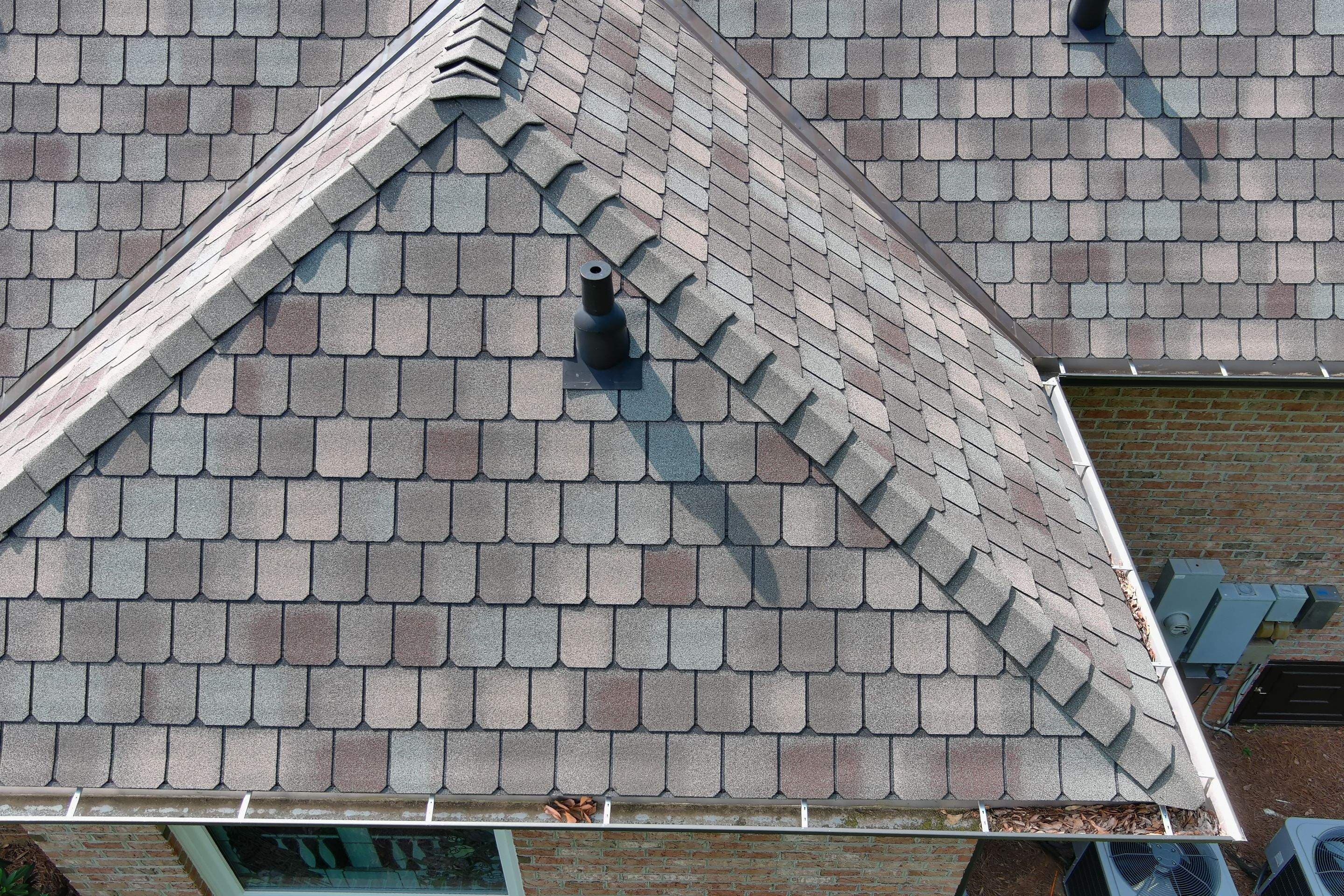
Types of flashing Rhino may inspect
Step flashing uses individual metal pieces woven with shingle courses beside a wall or chimney. Each piece overlaps the one below. Counterflashing covers the upper edge at masonry so water cannot run behind it. Apron and back-pan pieces manage the lower and upper sides of larger obstructions.
Kick-out flashing sits where a roof edge meets a wall and directs concentrated runoff into the gutter. When it is missing or too small, water can run behind siding or stucco and damage wall sheathing out of sight. The interior symptom may appear low on a wall rather than at the roof line.
Pipe boots, skylight kits, valley metal, drip edge, transition pieces, and low-slope terminations also perform flashing work. Each product follows a different shape and movement pattern. Rhino identifies the type and the surrounding materials before deciding how much must be opened.
Chimney
Apron, steps, back pan or cricket, counterflashing, masonry joints, and roof slope work together.
Sidewall
Shingles, step flashing, siding clearance, weather barrier, and kick-out control the joint.
Penetration
Boots or shaped flashing seal around pipes and vents while shedding onto the roof below.
Roof transition
Material changes and slope changes need height, laps, and a clear downhill discharge path.