Common roof valley designs
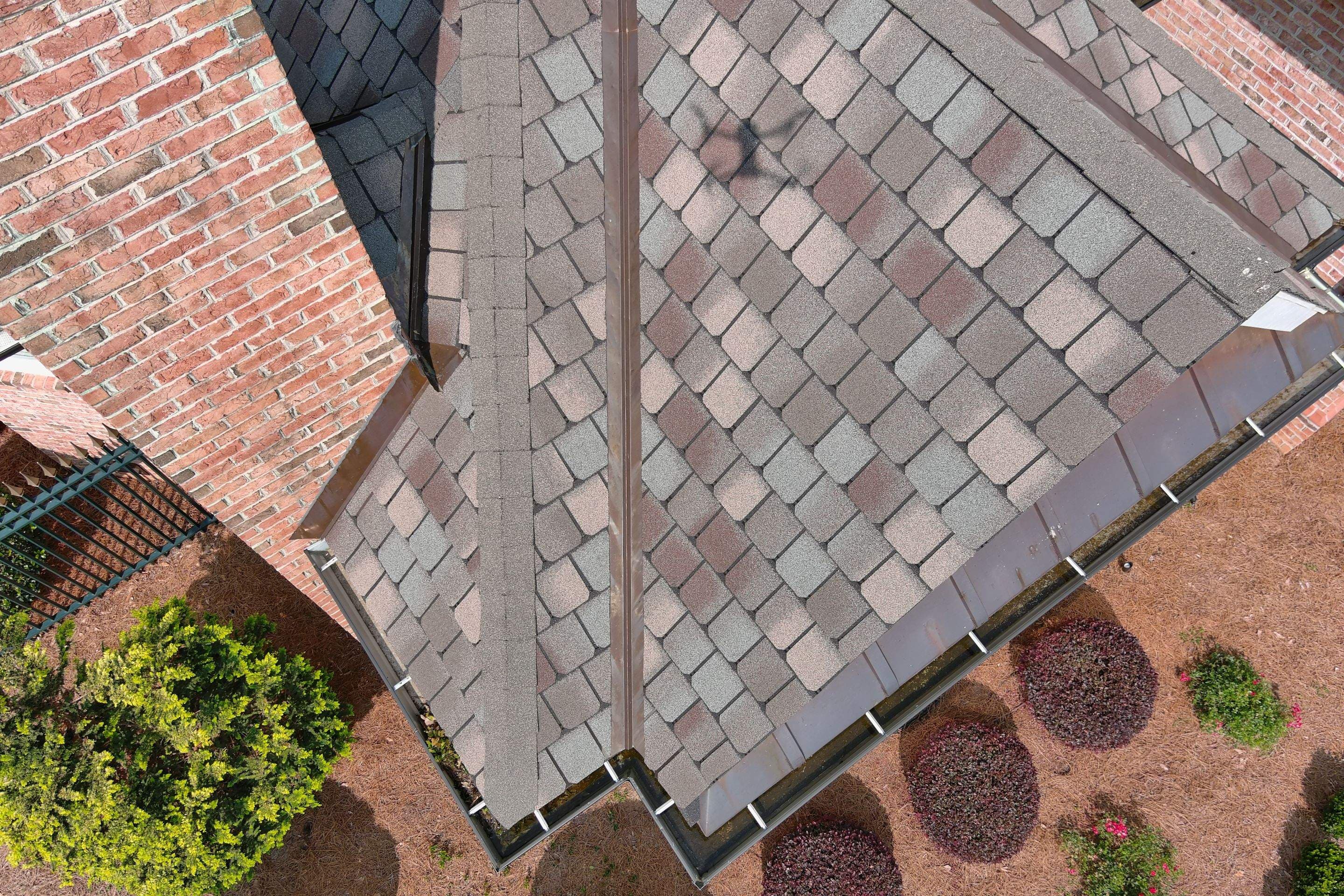
An open valley leaves a visible metal or other approved lining between cut shingle edges. Water flows on the exposed center. Cut lines, fastener placement, metal width, laps, and the way the lining terminates at the eave all affect performance.
A closed-cut valley carries shingles from one slope across the channel and cuts the other side along a planned line. The lower course arrangement and cut location keep water away from vulnerable joints. Fasteners should remain out of the central flow area.
A woven valley alternates suitable shingle courses through the intersection. Not every laminated shingle or roof geometry is a good fit for weaving. Rhino identifies the existing method and material before selecting a repair, since mixing details in one short section can create awkward laps.
Flow line
The center needs a clear path without exposed fasteners, debris dams, or cuts that invite cross-wash.
Lining
Metal, membrane, and underlayment condition matter beneath the visible valley surface.
Shingle edges
Cuts, corners, sealant, fastening, and brittle material affect whether a local repair can be integrated.
Discharge point
The valley should release into a gutter or lower roof detail without backing water under the eave.